SBF Inland exam questions

Signboards, bridges & locks

Berths, bridge openings, weirs, lock lights and the order of entry into a lock. Most questions show a sign. Rule of thumb: boards with a red border prohibit, require or restrict, blue information signs inform.

Practise for free (opens in a new tab)

out of 5 stars,4.98 · 53 ratings · iOS & Android

All SBF Inland topics

All 27 questions in this topic

In the official catalogue answer A is always the correct one. “Test yourself” shuffles the answers and only reveals them after you choose.

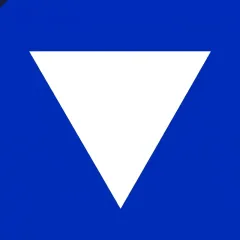
Question 107 · Specific question Inland

What does this waterway sign mean?

SBF Inland exam question 107 – figure
  1. Berth for vessels with explosive substances, prohibited for small vessels. Correct
  2. Berth for vessels with flammable materials, prohibited for small vessels.
  3. Berth for vessels with substances hazardous to health, prohibited for small vessels.
  4. Berth for all vessels, prohibited for small vessels.

Explanation by Boatpass

This sign marks a berth specifically for vessels carrying explosive substances.

Question 108 · Specific question Inland

What do these waterway signs mean?

SBF Inland exam question 108 – figure 1SBF Inland exam question 108 – figure 2
  1. Berth for vessels without dangerous goods, including small vessels. Correct
  2. Berth for vessels without dangerous goods, not for small vessels.
  3. Berth for vessels carrying dangerous goods, including small vessels.
  4. Berth for vessels carrying dangerous goods, not for small vessels.

Explanation by Boatpass

The two berth signs mark a berth for vessels not carrying dangerous goods.

Question 109 · Specific question Inland

Which locations or stretches are subject to a general prohibition on lying stationary even without special marking?

  1. Navigation canals and lock canals. Correct
  2. Navigation canals and the areas before lock canals.
  3. The areas before bridges and high-voltage lines.
  4. The areas before bridges and after high-voltage lines.

Explanation by Boatpass

Navigation canals and lock canals are subject to a general prohibition on lying stationary even without special marking.

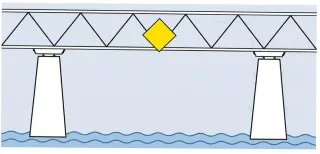
Question 110 · Specific question Inland

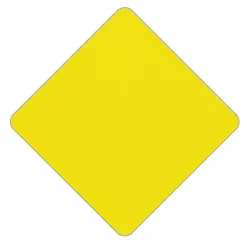
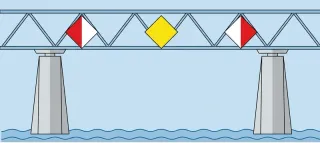
What is the meaning of the sign below?

SBF Inland exam question 110 – figure
  1. Recommended passage opening, passage permitted in both directions. Correct
  2. Recommended passage, passage in the opposite direction is prohibited.
  3. Passage is only permitted through this bridge opening and only in one direction.
  4. Passage is only permitted through this bridge opening and in both directions.

Explanation by Boatpass

A single yellow diamond above the bridge opening (sign D.1a) recommends using this opening.

Question 111 · Specific question Inland

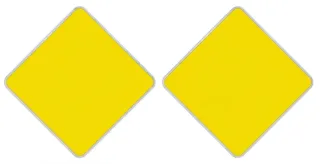
What do the following navigation signs mean?

SBF Inland exam question 111 – figure
  1. Recommended passage, passage in the opposite direction is prohibited. Correct
  2. Recommended passage opening, passage permitted in both directions.
  3. Passage is only permitted through this bridge opening and in both directions.
  4. Passage is only permitted through this bridge opening and only in one direction.

Explanation by Boatpass

Two yellow diamonds shown side by side or vertically mark a recommended passage in which traffic from the opposite direction is prohibited.

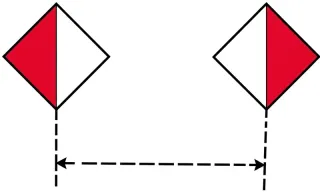
Question 112 · Specific question Inland

What do these waterway signs at a bridge mean?

SBF Inland exam question 112 – figure
  1. Passage is only permitted between the two boards. Correct
  2. Passage is only permitted outside of the two boards.
  3. Recommended passage only between the two boards.
  4. Recommended passage with oncoming traffic.

Explanation by Boatpass

The red-and-white boards (sign A.10) are a prohibitory sign.

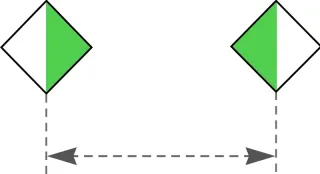
Question 113 · Specific question Inland

What do these waterway signs at a bridge mean?

SBF Inland exam question 113 – figure
  1. Recommended passage only between the two boards. Correct
  2. Passage is only permitted between the two boards.
  3. Passage is only permitted outside of the two boards.
  4. Recommended passage with oncoming traffic.

Explanation by Boatpass

The two signs recommend keeping within the space between them when passing under the bridge.

Question 114 · Specific question Inland

What does this sign on bridges mean?

SBF Inland exam question 114 – figure
  1. Recommended passage with oncoming traffic. Correct
  2. Recommended passage without oncoming traffic.
  3. Recommended passage in one direction only.
  4. Passage is only permitted next to the board.

Explanation by Boatpass

This bridge sign signals the recommended passage where oncoming traffic is possible.

Question 115 · Specific question Inland

What do these waterway signs at a bridge mean?

SBF Inland exam question 115 – figure
  1. Recommended passage without oncoming traffic. Correct
  2. Recommended passage with oncoming traffic.
  3. Recommended passage in both directions.
  4. Passage is only permitted outside of the two boards.

Explanation by Boatpass

Two yellow diamonds side by side mark the recommended passage opening only for traffic approaching from the side on which the signs are visible.

Question 116 · Specific question Inland

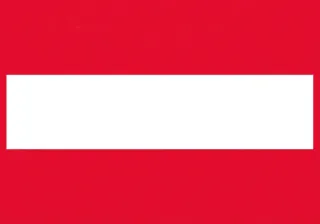
What does this waterway sign mean near a weir?

SBF Inland exam question 116 – figure
  1. Passage is prohibited and the waterway is closed to navigation. Correct
  2. The water area is closed, but power-driven small craft may enter.
  3. The water area is closed, but small craft without propulsion engines may enter.
  4. An installation requiring protection.

Explanation by Boatpass

The red-white-red sign is the general prohibitory sign A.1: no passage, navigation is closed.

Question 117 · Specific question Inland

What is the significance of a red light or a red and a green light in front of a lock?

  1. Entry is prohibited, the lock is being prepared to open. Correct
  2. Entry prohibited, the lock is being prepared to close.
  3. Exit prohibited, preparations are being made to open the lock.
  4. Exit prohibited, the lock is being prepared to close.

Explanation by Boatpass

If one of two red lights goes out so that only one red light remains, or if the lock shows red and green together, entry is still prohibited while the lock is being prepared to open.

Question 118 · Specific question Inland

In what order do vessels that are not small vessels and small vessels that are to be locked together enter the lock?

  1. Small vessels only enter the lock after vessels that are not small vessels and after being requested to do so by the lock supervisor. Correct
  2. Small vessels enter the lock before vessels that are not small vessels and before being requested to do so by the lock supervisor.
  3. Small vessels enter the lock in front of vessels that are not small vessels and without being asked to do so by the lock supervisor.
  4. Small vessels enter the lock after vessels that are not small vessels and without being asked to do so by the lock supervisor.

Explanation by Boatpass

When small craft are locked together with vessels that are not small craft, the small craft enter only after the other vessels and only when instructed by lock control.

Question 119 · Specific question Inland

Several small craft are to be locked together from the upper level to the lower level. What requires particular attention when they enter the lock and during the lockage?

  1. The last small craft must enter the lock chamber far enough to remain clear of the upper sill when the chamber is emptied. The mooring lines must be handled so that contact with the lock walls, lock gates, and other craft is avoided and the lines can be eased safely. Correct
  2. The first small craft must enter the lock chamber far enough to remain clear of the upper sill when the chamber is emptied. The mooring lines must be handled so that contact with the lock walls, lock gates, and other craft is avoided and the lines can be eased safely.
  3. The first small craft must enter the lock chamber far enough to remain clear of the upper sill when the chamber is filled. The mooring lines must be handled so that contact with the lock walls, lock gates, and other craft is avoided and the lines can be eased safely.
  4. The last small craft must enter the lock chamber far enough to remain clear of the upper sill when the chamber is filled. The mooring lines must be handled so that contact with the lock walls, lock gates, and other craft is avoided and the lines can be eased safely.

Explanation by Boatpass

During a down-lockage, the water level falls. The last small craft entering from the upper level must therefore proceed far enough into the lock chamber to be completely clear of the sill …

Question 156 · Specific question Inland

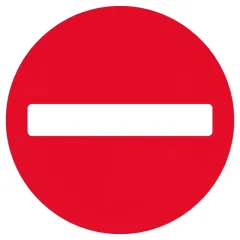
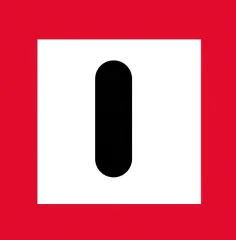
What does this waterway sign mean?

SBF Inland exam question 156 – figure
  1. The water area is closed, but small craft without propulsion engines may enter. Correct
  2. The water area is closed, but small craft whose engines are not running may enter.
  3. The water area is closed and small craft may not enter.
  4. The water area is closed to navigation.

Explanation by Boatpass

The round red sign with a white horizontal bar is sign A.1a: this water area is closed.

Question 157 · Specific question Inland

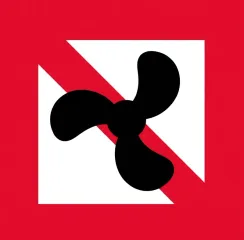
What does this waterway sign mean?

SBF Inland exam question 157 – figure
  1. Navigation is prohibited for power-driven vessels. Correct
  2. Navigation is prohibited for power-driven small craft.
  3. Navigation is prohibited for vessels without propulsion engines.
  4. Navigation is prohibited for small craft whose engines are not running.

Explanation by Boatpass

Sign A.12 prohibits navigation by power-driven vessels.

Question 158 · Specific question Inland

How is a protected bathing zone marked?

  1. By yellow buoys. Correct
  2. By green buoys.
  3. By red buoys.
  4. By red-and-green striped buoys.

Explanation by Boatpass

A protected swimming area is marked by yellow buoys.

Question 172 · Specific question Inland

A pleasure craft enters a lock approach behind a vessel that is not a small craft. A vessel leaving the lock chamber displays a blue board with a white scintillating light on its starboard side. What does this signal mean?

  1. The outgoing and incoming vessels pass starboard-to-starboard; the small craft is only required to pay increased attention. Correct
  2. The outgoing and incoming vessels pass port-to-port; the small craft is only required to pay increased attention.
  3. The outgoing and incoming vessels pass starboard-to-starboard; the small craft must wait.
  4. The outgoing and incoming vessels pass port-to-port; the small craft has priority.

Explanation by Boatpass

The vessel leaving the lock chamber and the vessel entering it pass starboard-to-starboard.

Question 198 · Specific question Inland

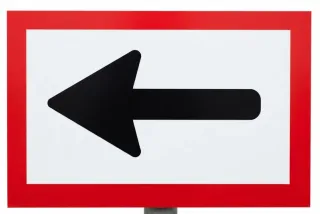
What does this waterway sign mean?

SBF Inland exam question 198 – figure
  1. Prescribed direction of travel. Correct
  2. Direction of travel to the left is prohibited.
  3. Prescribed direction of travel for small vessels only.
  4. Recommended direction of travel.

Explanation by Boatpass

Arrow sign B.1 is a mandatory sign: the vessel must take the direction shown and follow the prescribed course.

Question 199 · Specific question Inland

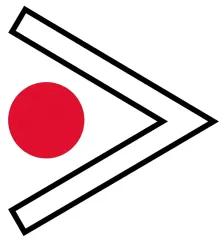
What does the sign below mean when the red light is on?

SBF Inland exam question 199 – figure
  1. Prohibition of entry into a harbor or secondary waterway. Correct
  2. Prohibition of overtaking on the section of the route.
  3. Attention double lock, left chamber blocked.
  4. Attention: exiting the harbor or side fairway.

Explanation by Boatpass

The illuminated arrow identifies the affected branch; the red light is the general prohibition signal.

Question 200 · Specific question Inland

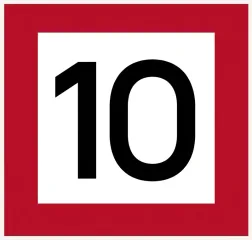
What does this waterway sign mean?

SBF Inland exam question 200 – figure
  1. Maximum speed of 10 kilometres per hour relative to the bank. Correct
  2. Maximum speed of 10 kilometres per hour relative to the current.
  3. Maximum speed of 10 kilometres per hour for small craft.
  4. 10 kilometres per hour for larger vessels.

Explanation by Boatpass

Sign B.6 requires the indicated speed of 10 kilometres per hour relative to the bank not to be exceeded.

Question 201 · Specific question Inland

What does this waterway sign mean?

SBF Inland exam question 201 – figure
  1. Mandatory instruction: exercise particular caution. Correct
  2. Mandatory instruction: proceed straight ahead.
  3. Mandatory instruction: sound the attention signal.
  4. Mandatory instruction: stop before the sign.

Explanation by Boatpass

Sign B.8 is a mandatory instruction to exercise particular caution.

Question 202 · Specific question Inland

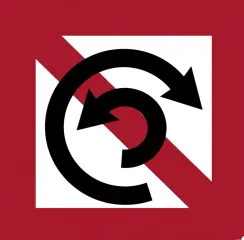
What does this waterway sign mean?

SBF Inland exam question 202 – figure
  1. No U-Turn. Correct
  2. Prohibited direction of travel right or left.
  3. Prohibition to navigate in both directions shown.
  4. No turning in the middle of the fairway.

Explanation by Boatpass

The no-turning sign prohibits turning the vessel in this area.

Question 203 · Specific question Inland

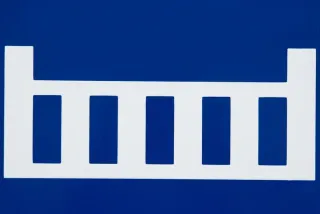
What does this waterway sign mean?

SBF Inland exam question 203 – figure
  1. Recommended turning area. Remaining stationary is prohibited for all vessels. Correct
  2. Recommended turning area. Small craft may remain stationary.
  3. Mandatory turning area. Remaining stationary is prohibited for all vessels.
  4. Mandatory turning area. Small craft may remain stationary.

Explanation by Boatpass

This sign marks a recommended turning area. Vessels may turn here, but may not remain stationary; the area must remain clear for manoeuvring vessels.

Question 204 · Specific question Inland

What does this waterway sign mean?

SBF Inland exam question 204 – figure
  1. Weir. Correct
  2. Lift bridge.
  3. Lock.
  4. Safety gate.

Explanation by Boatpass

Information sign E.3 indicates a weir. Whether a particular weir opening may be used depends on its additional marking; passage through a weir opening is generally prohibited and is …

Question 243 · Specific question Inland

What do the signs on the bridge shown below mean?

SBF Inland exam question 243 – figure
  1. Recommended passage with oncoming traffic and lateral limits on permitted bridge passage. Correct
  2. Recommended passage without oncoming traffic and lateral limits on permitted bridge passage.
  3. Mandatory passage with oncoming traffic and lateral limits on permitted bridge passage.
  4. Recommended passage with oncoming traffic without lateral limits on the permitted bridge passage.

Explanation by Boatpass

The boards mark a recommended bridge passage in which oncoming traffic is permitted and also define the lateral limits of the permitted passage.

Question 244 · Specific question Inland

What does this sign mean at a bridge opening?

SBF Inland exam question 244 – figure
  1. Passage is prohibited and the opening is closed to navigation. Correct
  2. The passage is closed, but small craft with a propulsion engine may use it.
  3. The passage is closed, but small craft without a propulsion engine may use it.
  4. An installation requiring protection.

Explanation by Boatpass

General prohibition sign A.1 at a bridge opening closes that particular opening to passage.

Question 245 · Specific question Inland

Why is it forbidden to use car tires as fenders when passing through locks?

  1. Car tires do not float and can cause significant disruption in the locks. Correct
  2. Car tires generate too much friction.
  3. Car tires create black paint marks on the boat and the lock wall.
  4. Car tires are buoyant and can cause significant disruption in the lock.

Explanation by Boatpass

Car tyres are prohibited as fenders in locks because they are not buoyant.

Keep practising

Sources and status

  • Questions and answers: official German question and answer catalogue, SBF Inland at www.elwis.de , valid since 1 August 2023. Issued by the German Federal Ministry for Digital and Transport (BMDV) and published in the Verkehrsblatt.
  • Current version: BMDV notices of 28 April 2023 amending the catalogues SBF Inland (PDF) , in force since 1 August 2023.
  • The German wording of questions and answers is reproduced unchanged; obvious typos in the catalogue are corrected. In the official catalogue answer a is always the correct one. The grouping into topics is by Boatpass; the official catalogue only distinguishes basic and specific questions.
  • The official catalogue and the exam are in German. The English text is an unofficial translation by Boatpass for learning purposes; only the German wording is authoritative.
  • Figures based on the official question catalogue (ELWIS), some redrawn by Boatpass.
  • “Explanation by Boatpass”: original texts by Boatpass, shown here as an excerpt; the full explanations and memory aids are in the app. © Boatpass, reproduction only with permission.

Ready for your exam?

15 questions a day across all licences, no account and no payment details.

Download for free

iPhone · iPad · Android